
Come Chat About Social Capital
Contributed by TSP board member Leigh Grigg
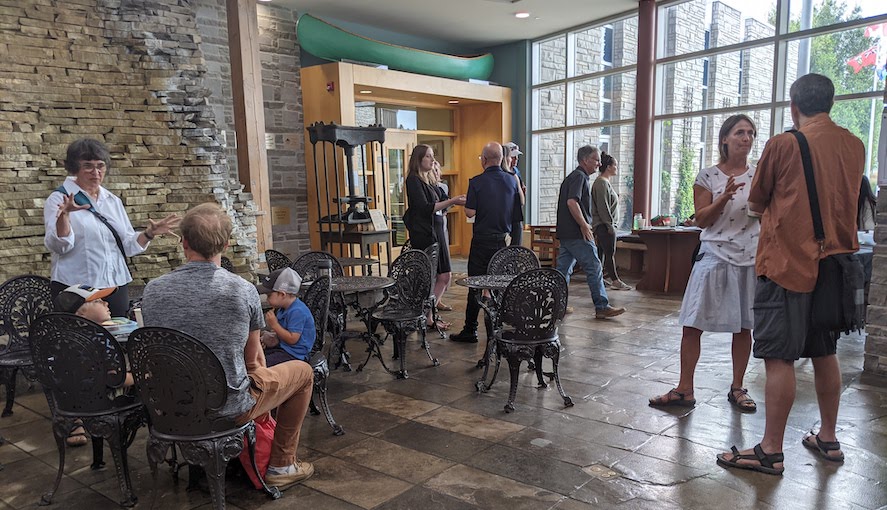
How do you get to a Resilience Networking event at Grey Roots on November 25th?
By carpooling with people you might know on the invite list here.
How did we get to a Resilience Networking event at Grey Roots on November 25th?
I’ll describe -- as briefly as I can -- what led to this moment for me:
- Greta Thunberg got the world’s attention with a wave of climate action,
- Resilience, a film by Liz Zetlin and John Anderson, toured and engaged the public, and many grassroots groups got organized,
- Bruce Davidson (Brockton) and Beth Hamilton (West Grey) put people together in a room on Oct 22, 2019 to share and discuss a Regional Environment Group. The subsequent meeting in March 2020 was canceled due to COVID19 outbreak,
- In summer 2020, Ivan Chan from Meaford suggested everyone who was organizing meet up in the region. Shortly after, GBCAN (Grey Bruce Climate Action Network) was founded by Liz Zetlin and Marilyn Struthers, inviting 1-2 members of each grassroots group to meet and unite to get citizens to press municipalities to act,
- Plenty of the grassroots groups dabbled or diversified into projects that didn’t directly involve their municipality, instead choosing to “leave a seat at the table for municipalities" while they pursued this climate action they deemed meaningful.
- A lot of “systems thinking” conversations were held about regeneration, nature, farming, food, land use, the economy… challenging traditional climate action narratives and finding some relevance in a region beset by rural challenges.
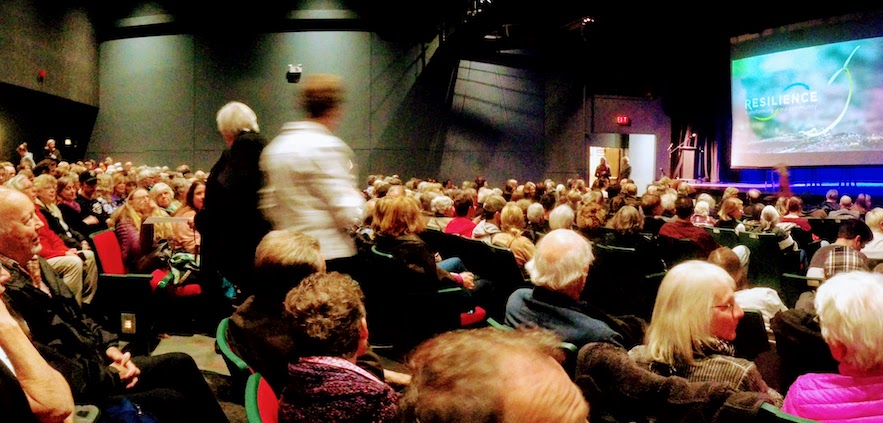
Zooming around the region in this ecosystem myself, I heard the term social capital used, so I looked it up in a dictionary.
In short, it’s when neighbours care for each other.
In my mind (and because of my commitments at the time) I often use the term in combination with another term: bagida’waad, which in Anishinaabemowin means “they set a net." so when I use the term social capital I do so with the consideration that it can be cast widely about if we care to do so. It’s in this way that I consider how humans and the various species in our region can be resilient to environmental threats, including climate change.
So my journey in dreaming up this event really began to hit its stride. Without getting in too much detail:
- I attended every GBCAN meeting, and some other local grassroots groups' events.
- I held 2 years of monthly panel discussions known as Climate Forum with help from others, of course.
- I attended every Bagida’waad Alliance event that I was invited to.
- I learned about the difference between Regeneration and Sustainability in Grey-Bruce from local thought leaders.
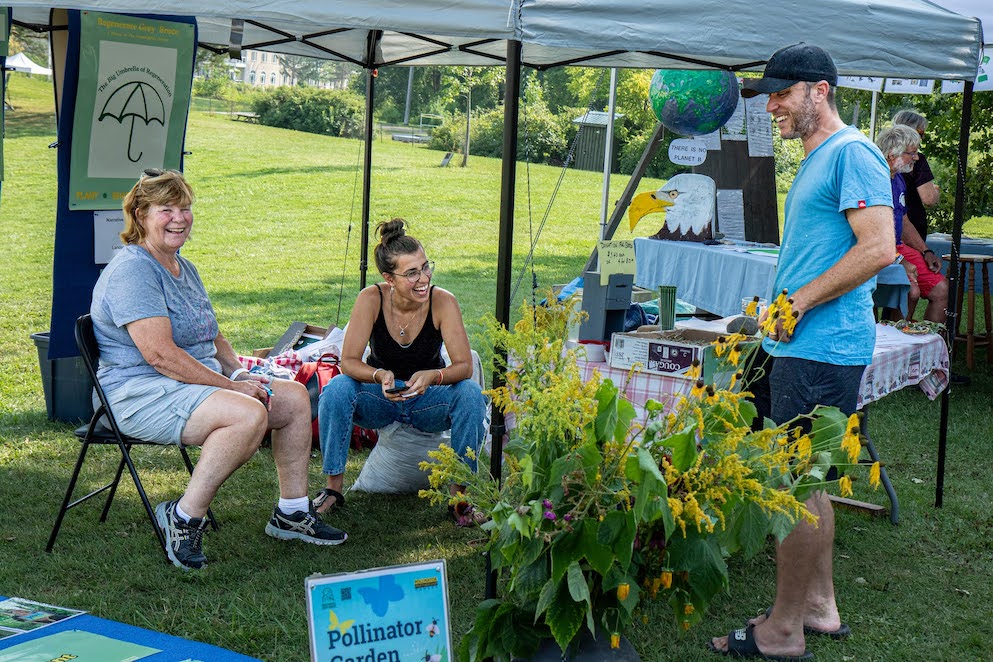
These little journeys of discovery helped me hold space for longer conversations about more broad topics, and think about systems around us that affect learning, change-making, caring, and acting on climate, regeneration... or whatever you want to call the actionable part of “creating a brighter future” for my life and others after me. I’ve been focusing particularly on where my family has settled, Saukiing Anishnaabekiing, for many reasons, not the least of which is because of an aim to do my part in Reconciliation. “Think Global, Act Local” also helps keep any potential climate solutions relevant to those around me.
In our region we are all living very close to nature, even when we go about our business in our neighbourhoods and towns, so care for the land and biodiversity is typically a co-benefit of what I would like to spend my time doing. Quick-fix solutions like EVs and solar panels seem easy but don’t seem to resonate with people at a deeper level, and so are slowly and agonizingly adopted. Solutions that improve our trails or involve permaculture as examples, seem to resonate with me because they affect the land around me that I’ve foundationally enjoyed growing up on, with many formative positive experiences in the outdoors. The latter category of solutions indeed resonate with others, but are still rarities in takeaways of networking meetings because they often take time and patience to see the outcomes.
This past year or so, Lydia, Simona, Beth Anne, Jo-Anne and I have been attending networking events to see where everybody’s at with climate, an astounding 8 years after Greta Thunberg began to strike. They include:
- Community Gardening and other skill-building workshops (a focus on growing food)
- Networking events put on by Escarpment Corridor Alliance (a focus on nature)
- South Georgian Bay Networking Group (a focus on green economy)
- Youth Climate Action Conference (to hear directly from Gr. 6-8 elementary students)
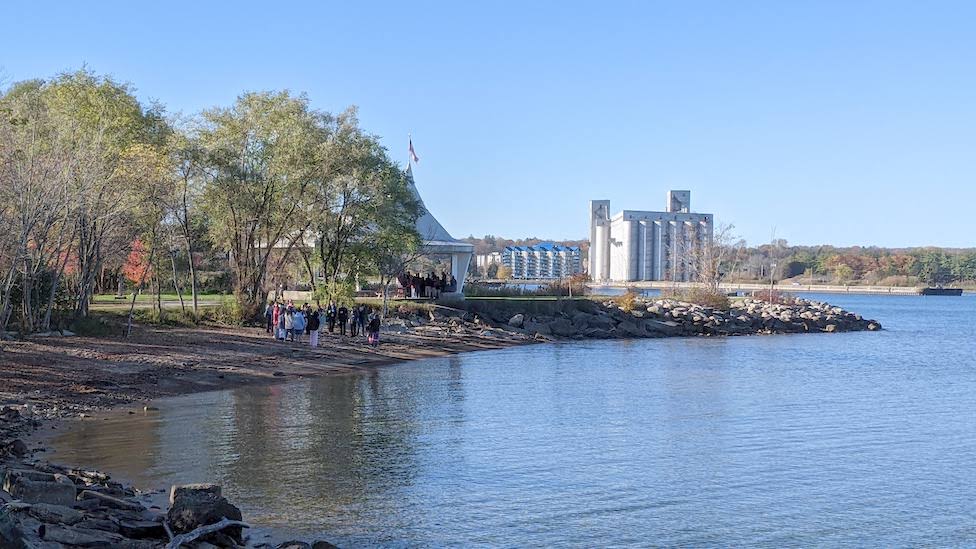
We continually notice some broader topics are missing at these events, or they’re too broad to focus on in a group setting. They’re often kicked down the road a bit, stored in the back of everyone’s mind, for another type of meeting. Ahem.
Most conversations we’ve been hearing focus on ending climate change by "turning off the tap, and the commitment & care involved in doing so, against so many headwinds. Sometimes at these events we hear about threats that involve land-use and they’re the conversations that end up finding sympathetic listening, and maybe some commonalities with projects we know are on the go, but for the most part the action that the person has devised to stop the threat is not addressing its root cause. The Sustainability Project jumps in with our networking hats and finds the co-benefits in the projects that groups are doing that will address the threat.
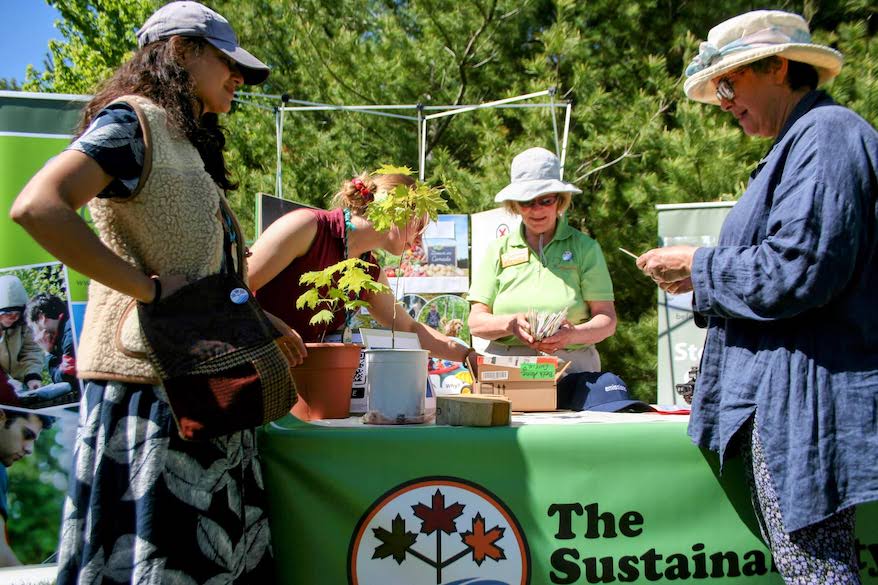
On November 25th we want to explore the slow solutions, the ones that resonate with our rural neighbours, and find where we overlap. We aspire to "work smarter not harder" as a community, and we suspect social capital has something to do with it. We want to embrace the incremental positive change here instead of getting depressed that traditional climate solutions aren’t being adopted, or fight a specific threat to a specific ecosystem. It's about time we created more mycelium.
We're referring to the list that the invitees received to pique their attention: the items missing from most climate conversations 'round here include the concepts of social capital, skill building to face the future, planning for scarcity, windows of opportunity to create resilience, addressing food security, protecting biodiversity, listening to elders, standing up for youth, learning and acting holistically for climate adaptation, and finding co-benefits that multisolve between our groups. Multisolving not only unites, but also recruits volunteers.
My first call was to John Butler because I trust his instincts as a deep thinker. John often pulls together climate conversations in Grey Highlands during Warm Green Evenings. My second and third calls were to Amy Billinghurst at ECA and Simona Freibergova who’ve been listening in on the networking going on in the region. Many, many other people are doing work here that creates a brighter future, and there’s a role for someone to host the conversations about the gaps.
On November 25th, we have no plans yet for creating a group or performing any climate action, but we are doing several things:
- Finding out if you have a “tingling feeling” that something systemic need our attention,
- Getting one person to do one job: listen carefully for what unites us, “read the room” and sum up at the end of the meetup, and
- Holding space for a group action.
You should also benefit from a bit of inspiration: a local multisolving case study from Tom Buck at Save Georgian Bay, plus a bit of workshopping & skill building, of course, to make it worth the journey to Owen Sound.
I’m looking forward to seeing you there: I will update our Sustainability Map in advance, and I will commit to baking some cookies.
Incrementalism abounds,
Leigh Grigg
The Sustainability Project